
South Dakota Diary
July 2, 2026

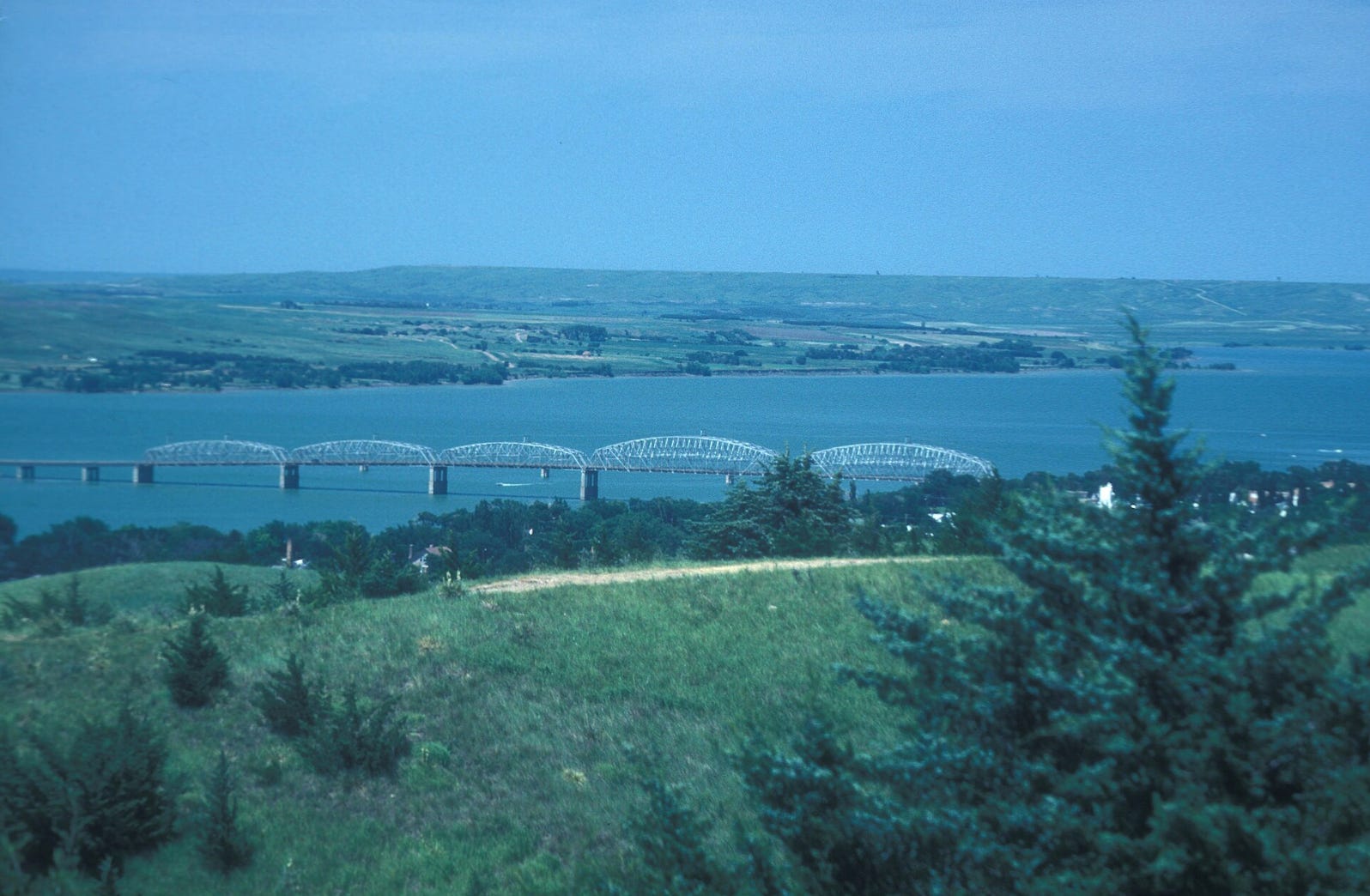
I left home twenty-five years ago and haven’t been back for twelve. The combination of having young children and the pain of getting to Chamberlain, S.D. (population 2473, 140 miles west of the nearest regional airport), meant that for years we settled for Minnesota, where my sister lives, instead of making the full trip home. My parents also moved to upstate New York in 2017, removing the major impetus to make a trip that took longer than flying to London. Last time I was in town, I visited old friends who were now stewards of family farms and caught up on years of local gossip courtesy of my former hairdresser. I heard about the meth epidemic decimating the lives of people who were already poor and vulnerable, and the babies born at the local hospital who didn’t stand a chance. My father, still strong enough to do so, pulled his five tiny granddaughters down Main Street in a red wagon.
Chamberlain was never idyllic, lit by memory in amber light. Still, those days were the before times: before the rise of MAGA as a major political force, before Covid and the insurrection on January 6, 2021, before the total distortion of our democracy around the deranged, anti-human aspirations of billionaire sycophants like Elon Musk, Peter Thiel, and Marc Andreessen. If anything, digital technologies still retained something of a democratic sheen in 2014 – a lingering hope that they would pave the way toward an emancipated future. In 2014, American women had the constitutional right to an abortion and there were no Serious Conversations about whether they really needed the right to vote. The climate crisis was something that well-intended governments and businesses could mitigate with enough resources and will, and eugenics a remnant of dark times rather than ascendent ideology among the young, right-wing, and very online.
South Dakota was already a red state, of course, with a younger and less overfilled Kristi Noem serving in Congress. But the state’s strong association with Republican politics is something I always like to qualify. When I was growing up we chiefly sent Democrats to Washington: Tom Daschle and Tim Johnson were our Senators. This was also the state that elected Jim Abourezk in 1972, the first Arab-American to serve in the Senate. This often surprises people, which I suspect has something to do with the unfair and ultimately self-defeating (for liberals and leftists) assumption that rural areas are uniformly populated by rednecks, climate deniers, and gun freaks. Those people do exist, but there are two things to say on this front.
One of the worst aspects of ‘left’ identity politics is the assumption that people’s opinions and characters are fixed by their social positions. Philosophically, I surmise this has something to do with a fetishization of authenticity, but the effect is a remarkably flat view of the human subject. But people’s opinions, and their actions, are malleable, and it is the job of strong leaders to enable people to abandon even their most odious ideas when offered an alternative vision. Zohran Mamdani proved a master of this in his ability to appeal to voters who previously supported Donald Trump, offering a platform focused on material needs in lieu of a politics of grievance.
The second point is that there is an organic progressive politics with historic roots in the upper Midwest—from South Dakota’s rural electric and farming cooperatives to Milwaukee’s sewer socialism—that Democrats have forgotten to their own detriment. There’s a reason my father (a white, male, gun-owner who grew up on a farm) was dismayed with the candidates coming off the assembly line at McKinsey and Co. but thought AOC was a breath of fresh air. The fact that many people regard it more realistic to abolish the electoral college (which, just to be clear, should also happen) than to craft a political platform that would speak to such voters is telling: the desired fix is often institutional or technocratic rather than one that requires a mass base and therefore must talk explicitly about inequality, class, and the limitations of our dollar democracy.
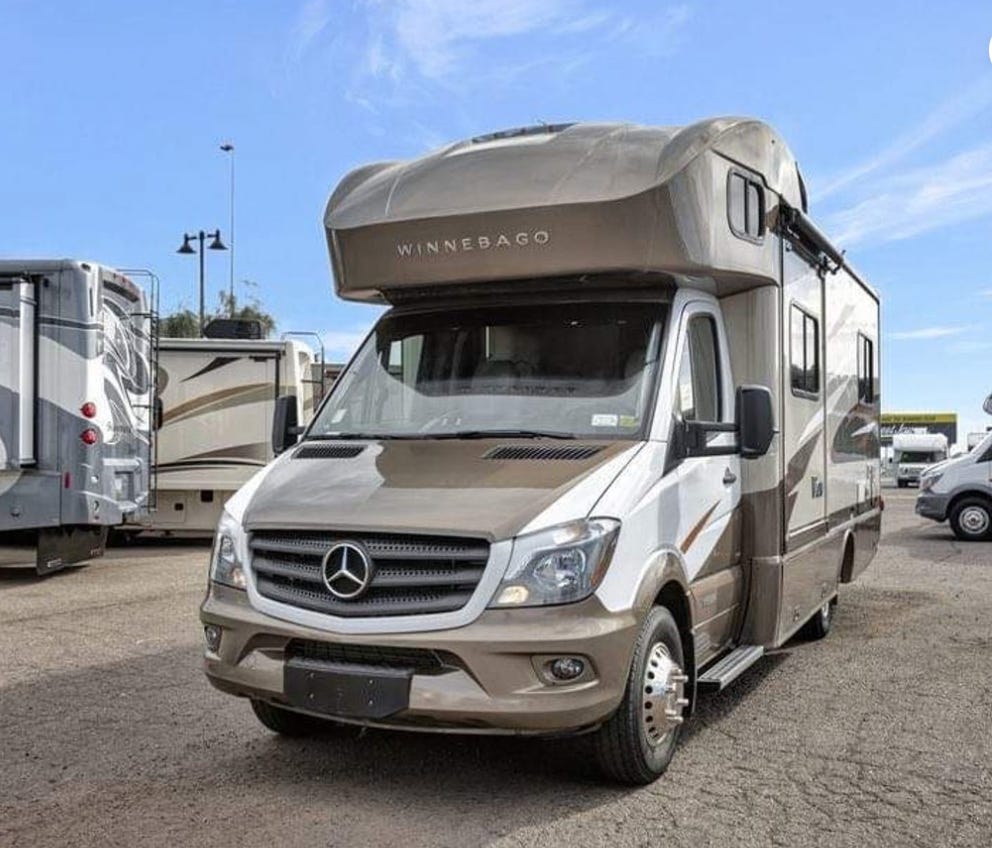
As much as politics is constantly on my mind, I hope to find space in these reflections for something beyond than rank punditry. Above all, this trip is an adventure with many, many possibilities for shenanigans: a ten-day road trip with 9 adults, four teenagers, two littles, and a paralyzed dog packed into three RVs and one SUV + tent. We’ll be driving a massive loop around South Dakota to visit the places which formed us and the people who built us, with stops planned in Milbank, Eagle Butte, the Black Hills, the Badlands, Pine Ridge, Lower Brule, and finally Chamberlain, where I hope to water ski once more on my beloved Missouri River. I should also mention neither my husband nor I have ever driven an RV before. Come for the chaos, stay for the social and political commentary. Welcome to the South Dakota diary.
You forgot to mention George McGovern. I have interesting connections with South Dakota. Mid-1880’s, my maternal grandfather’s mother (as a little girl) and her family, Volga German immigrants, spent a year in Yankton. According to the family story, a year reminded them too much of Russian winters, so they left for California’s San Joaquin Valley. A little over 100 years later I was returning to that San Joaquin Valley with my sons after attending a NEH seminar in Minnesota. We drove across South Dakota, camped in the Badlands, stopped at the air museum at Ellsworth AFB, and then drove to Deadwood to see Wild Bill’s grave. 27 years later, my wife and I are driving our grandkids from Sioux Falls to Ellsworth AFB, where our son was stationed (I have a photo of him standing under a plane at that museum. I was not intending for my son when he was 13 to have a 21 year career in the AF and be shot at in Iraq and Afghanistan, but then . . .). Again, I never had any of this in sight in 1991. Life is funny.
94° in Arlington, Virginia at 10:45 AM with military jets flying overhead, spewing carbon dioxide into the atmosphere.