
Risk and Inevitability
New year, new (book) writing

Regular readers of Dr. Small Talk know that I’ve been working for many years on an irresponsibly large book about risk. Situated somewhere between history and political theory, the book aims to take risk apart as a concept, showcase it as a historically-embedded technology for managing uncertainty, and critique many of its present expressions — from the nuts and bolts of insurance markets to the metaphysical sensibilities of tech billionaires doing their best to accelerate (and profit from) the apocalypse.
Among my resolutions for 2026 is to finally finish writing this book. In keeping with that goal, I am going to start sharing more of my work-in-progress with readers, beginning with this little ditty about risk and the language of inevitability.
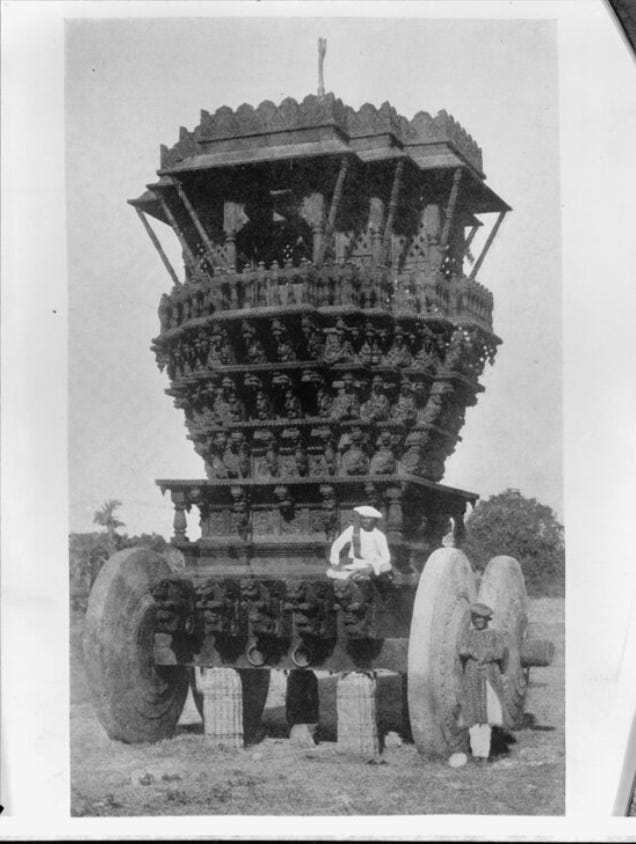
In his influential work on risk and modernity, the sociologist Anthony Giddens turned to the image of the juggernaut, a term that entered the English language via colonial India. British officials there were fascinated by the enormous temple cars that were used in processions for the Hindu deity, Jagannath, which were characterized by being almost impossible to steer once set in motion. The experience of living in capitalist modernity, Giddens contended, was “more like being aboard a careering juggernaut rather than being in a carefully controlled and well-driven motor car.”[1] As he elaborated, “For the high consequence global risks which we all now run are key elements of the runaway, juggernaut character of modernity, and no specific individuals or groups are responsible for them or can be constrained to ‘set things right’.”[2] He further noted, quite presciently, the sense of futility generated by living at the mercy of modernity-qua-juggernaut and the corresponding embrace of fatalism and resignation.
